Understand the pattern.
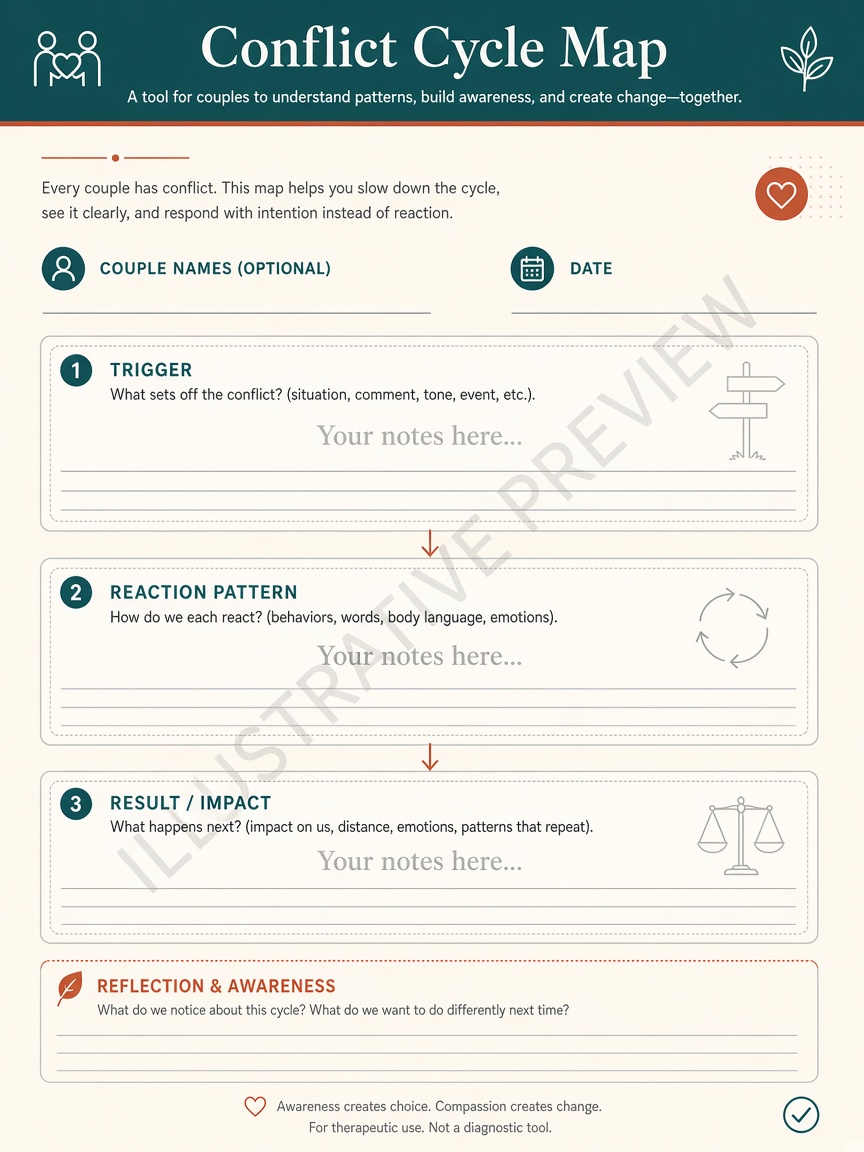
Name the cycle that keeps returning — pursuit and withdrawal, escalation, or stuck repair attempts.
A practical resource for relationship professionals
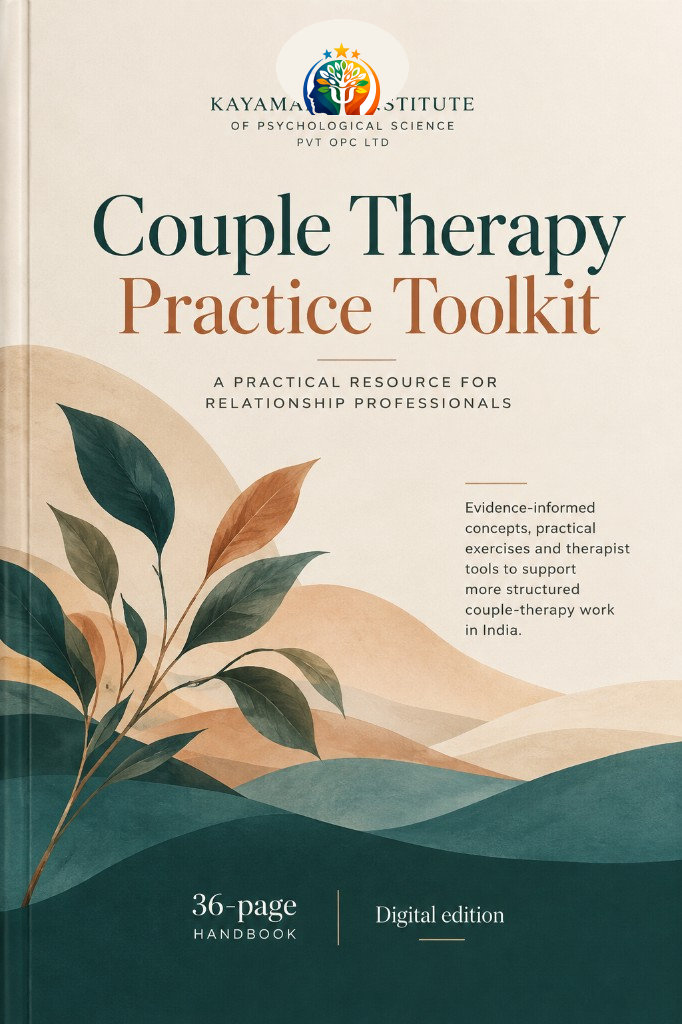
A practical handbook, 18 original worksheets, and therapist quick-reference tools for relationship professionals working with couples in India.
For trained or supervised helping professionals. This educational resource is not a qualification, licence or guarantee of clinical outcomes.
 Illustrative preview
 Illustrative preview
The practice challenge
Relationship concerns rarely fit into a single communication tip. Practitioners may need to explore interaction patterns, emotional responses, unmet needs, boundaries and the conditions required for safe and constructive work.
Name the cycle that keeps returning — pursuit and withdrawal, escalation, or stuck repair attempts.
Move from scattered discussion to one workable session focus with a matching prompt or worksheet.
Leave space to notice what shifted in the room, and what still needs careful assessment.
The toolkit brings together practical guidance, original worksheets and quick-reference material to help organise preparation, session activities and reflection.
Map interaction cycles and emotional responses before selecting an activity.
Choose a worksheet or prompt that fits the couple’s readiness and the session focus.
Use structured questions to support exploration while protecting autonomy.
Close with clarity: what shifted, what remains, and what may need referral or follow-up.
Practical guidance for structuring couple-focused sessions with clarity and care.
Prompts for conflict cycles, emotions, needs, boundaries, trust and repair.
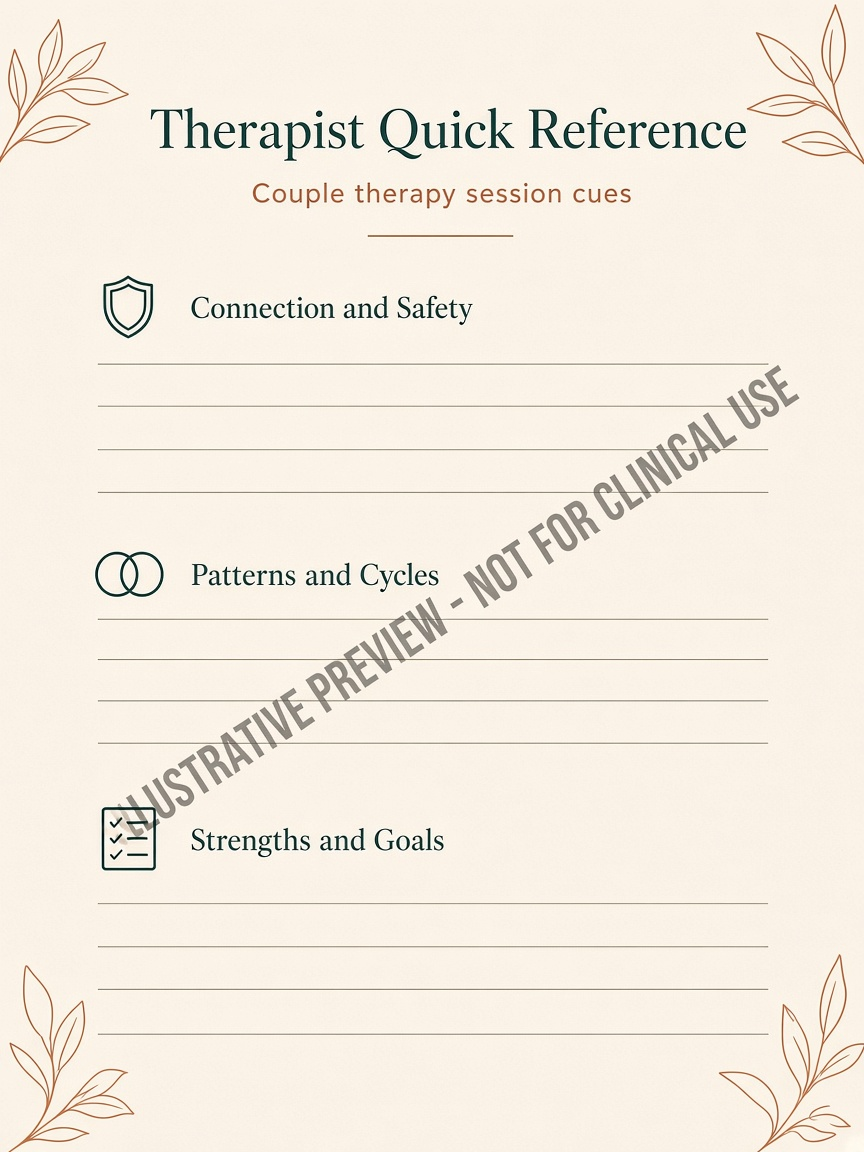
Session-ready reminders you can keep close while facilitating.
Pointers for continued study aligned with psychology-informed practice.
How to orient to the materials before you use them in supervised or trained work.
Digital download. Editable DOCX and print-ready PDF formats will be confirmed once the product package is finalised.
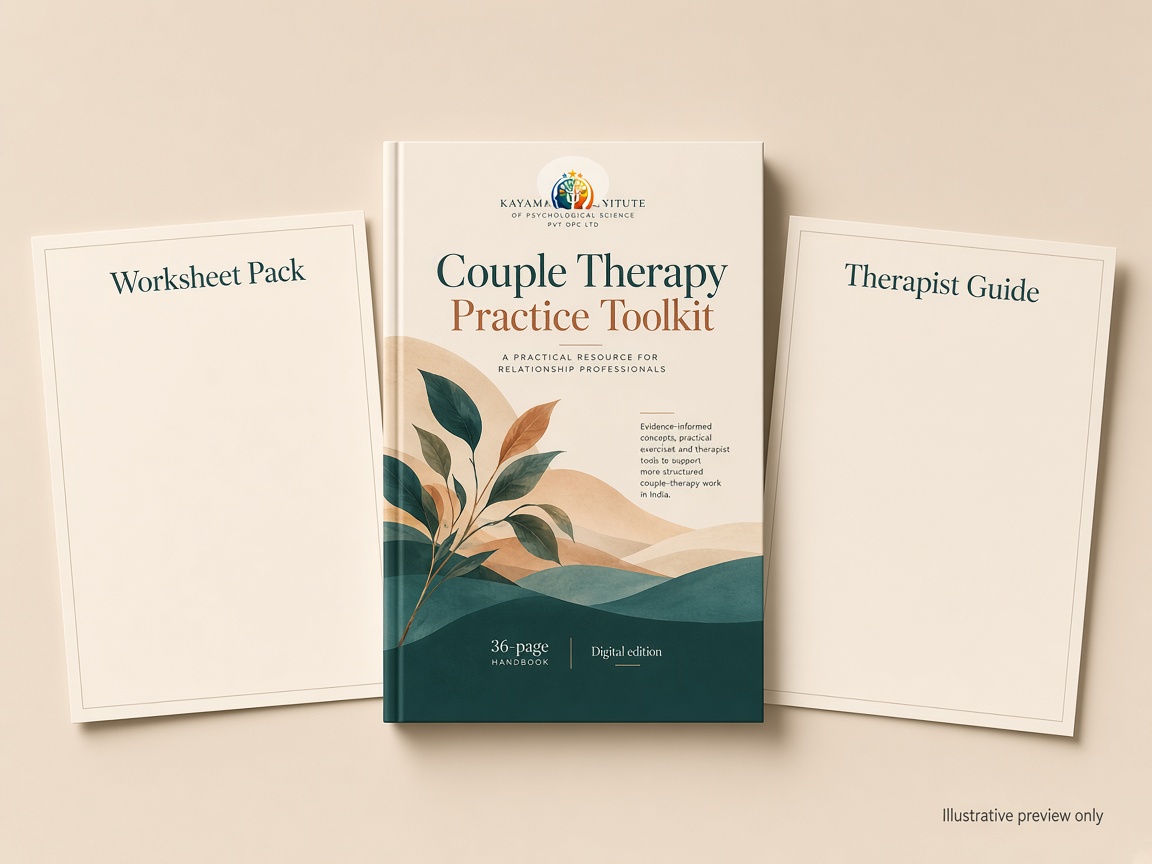
The handbook cover is the official product artwork. Worksheet and quick-reference frames are clearly labelled illustrative conceptual previews until the completed toolkit files are published.
Illustrative preview
Illustrative preview
Structured prompts can help couples and practitioners slow a familiar argument enough to notice roles, triggers and unmet needs — without assuming one script fits every pair.
Reflection exercises can open space to explore what sits beneath intensity, while the practitioner retains judgement about pacing, safety and whether conjoint work remains appropriate.
Worksheets focused on accountability, repair attempts and boundary clarity can support careful dialogue when both people are willing and it is clinically suitable to proceed.
These scenarios are illustrative. They are not client testimonials, case studies or outcome guarantees.
Resources support session planning but do not replace assessment, training, supervision or professional judgement. This toolkit is not a validated risk-assessment instrument.

Publisher
Published by Kayamanas Institute of Psychological Science (Kayamanas Institute of Psychological Science Pvt OPC Ltd.), presented for Dr. Ruupa Rao’s professional audience.
₹299
Digital Edition
Purchase not open yet
Purchase is not open yet. Secure checkout and the digital toolkit package are still being prepared. Contact the publisher to be notified when the ₹299 edition is available.
A 36-page practice handbook, 18 original A4 worksheets, a 7-page therapist quick-reference guide, a 4-page references and further-reading section, and a 3-page read-me guide — published as a digital edition by Kayamanas Institute of Psychological Science.
Trained or supervised helping professionals working with couples — including counselling psychologists, therapists, relationship counsellors, suitable early-career practitioners under supervision, psychology trainees in appropriate arrangements, and supervisors or educators.
No. This is an educational practice resource. It is not a certification, licence, qualification or substitute for professional training.
No. The toolkit supports session planning and reflection. It does not guarantee clinical outcomes and does not replace assessment, training, supervision or professional judgement.
The product is a digital edition. Final editable DOCX and print-ready PDF availability will be confirmed when the completed package is published. Do not assume a format until it is listed as included.
Secure checkout, download and email delivery are being configured. When purchase is available, files will be released only after verified payment via a secure download link — not through an unrestricted public URL. Meanwhile, contact the publisher using the details on this page.
A formal refund policy for this product has not yet been published on this website. Please contact the publisher at drruuparao@gmail.com or via WhatsApp before purchasing if you need clarification.
Email drruuparao@gmail.com or message WhatsApp +919741698282. The publisher is Kayamanas Institute of Psychological Science (Kayamanas Institute of Psychological Science Pvt OPC Ltd.).
Explore a practical collection of prompts, worksheets and reference material designed for thoughtful, structured couple-focused work.
₹299
Get the Toolkit — ₹299